The most common question I hear on a Thursday afternoon is oddly specific: “If I come in now, will I look refreshed by my Monday board meeting?” The short answer is yes, with caveats. The long answer is where smart planning, precise dosing, and a respect for facial movement create results that look like you on a great day, not like someone pressed pause on your expressions.
This guide distills the way I approach quick wrinkle treatments using aesthetic neuromodulators. It’s built for people who value subtlety, have real calendars to navigate, and want credible insight into what’s possible in a lunch break with no downtime. Think of it as a cosmetic neuromodulator guide focused on real-world choices, not hype.
What “quick” really means with wrinkle relaxers
Neuromodulators don’t freeze your face. They soften the pull of selected muscles so skin creases less with movement. The fast part refers to the visit and the minimal aftercare, not instant results. Most FDA-cleared products begin to show change at 2 to 4 days, settling by 7 to 14 days. I ask event clients to come 10 to 14 days before photos so we have time for tiny adjustments. Feeling “camera ready” on day three is possible for some areas, but planning for a week gives you leeway.
The discreet part comes from dose tailoring by muscle and careful placement. You can look fresher by Monday and remain fully expressive if your injector maps your movement, not just dots a forehead template. The natural-looking goal is achieved by respecting the way your face communicates. That means modest units in the right spots, measured expectations, and a willingness to do less at first.
Where minimal dosing makes the biggest difference fast
Micro-optimizations in targeted areas often outperform a big forehead plan. When time is short, I focus on dynamic zones that translate on camera and in conversation.
The lines across the forehead are tempting targets, but over-relaxing the frontalis can drop the brows or create a flat look. I prefer to balance it with the corrugator and procerus complex so the brows rest without heaviness. With a conservative dosing approach, you can still arch a brow, which keeps your expressions readable.
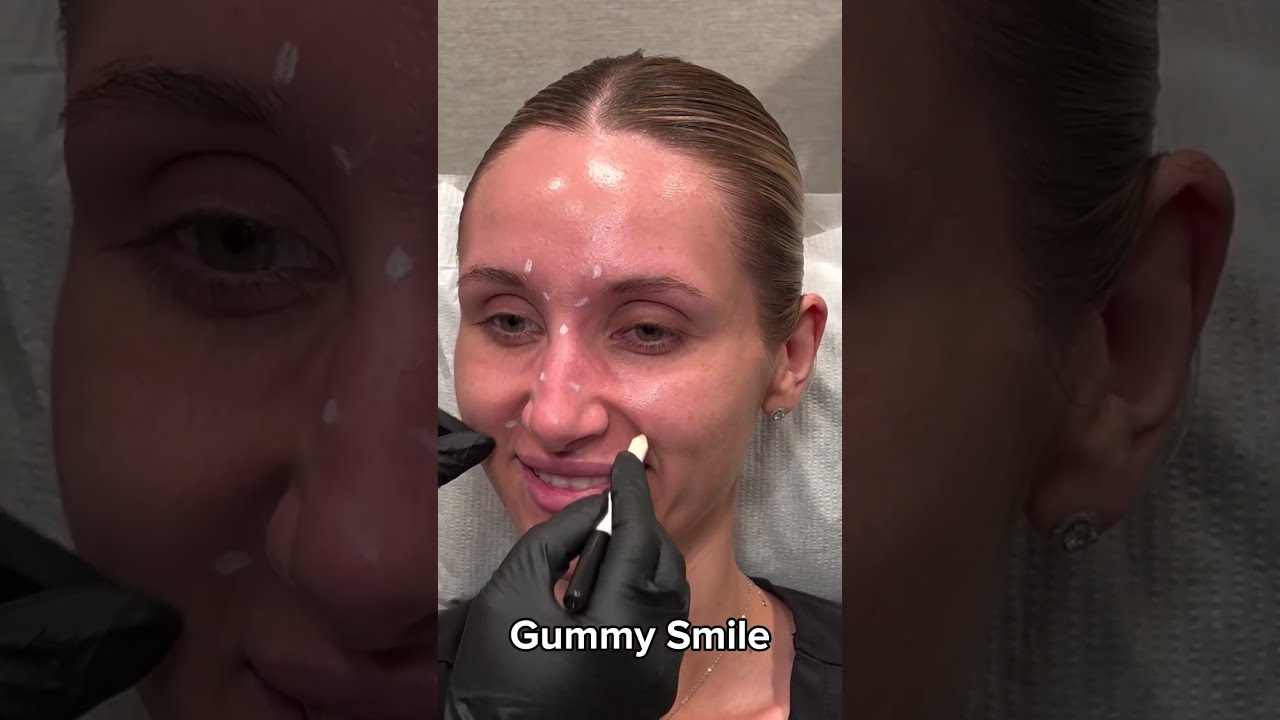
“Bunny lines” on the nose appear when you smile or sniff. Bunny line injections nudge those wrinkles without impacting the rest of your facial animation. This is one of the quickest wins for people who notice crinkling near the bridge of the nose in photos. Related to this area, a light touch for nose wrinkle treatment and nasal flare relaxation can smooth subtle tension without changing the shape of your nose.
Around the mouth, perioral wrinkle relaxation seems counterintuitive because everyone worries about losing lip function. Done conservatively, smoker line treatment injections soften vertical lines without blunting speech or whistle sounds. Lip line prevention injections can be preventive as well, especially if you purse when you think or sip through straws often. The trick is to use minimal units and keep them superficial, targeting the pattern of etched lines.
A small lift of the nose tip is possible with carefully placed nose tip lift injections that reduce downward pull when you smile. Results are modest but meaningful on camera, especially in three-quarter angles.
In the lower face, tension release along the chin can smooth pebbling and help the jawline read cleaner on Zoom. I use subtle facial refinement injections rather than heavy-handed relaxation that might change speech or chewing patterns. Less is more here, and the benefit builds with repeated conservative treatments.
The science in brief: how relaxers work without erasing you
Neuromodulators block acetylcholine from telling muscles to contract at full strength. Reduced pull equals fewer folds at the skin surface. The science of wrinkle relaxers is straightforward at the receptor level yet nuanced in practice. Not all muscles are created equal. The corrugators are thick workhorses. The procerus is shallow and triangular. The nasalis has lateral and transverse fibers. Dosing should reflect these differences.
Muscles also have memory and patterns of dominance. If your right brow pulls higher, you likely need asymmetric dosing. That’s dose tailoring by muscle, not by a map. Over time, consistent conservative dosing can recondition habit-driven wrinkle patterns. Think of it as training your face to relax in the spots that overwork, not immobilizing your expressions.
Natural expression preservation is not a slogan, it’s a plan
Here’s how we preserve your range of expression without inviting etched lines back too soon. First, we identify which movements define you. If your smirk is signature, we do not tamper with the corner elevator fibers that create it. We might instead target opposing depressor fibers to soften downturn without flattening your smile.
Second, we avoid blanketing entire zones with the same units. Technique over quantity injections matter more than chasing a number. I often use micro-aliquots at varied depths, placing them where the vector of pull originates rather than on top of wrinkles.
Third, we schedule touchpoints at 10 to 14 days for tiny edits. Preventing overcorrection is simpler than reversing it. If you need a hint more lift or less activity in a sliver of muscle, we adjust then. You leave looking like yourself, only rested.
A realistic timeline for events and “Monday-ready” goals
For wedding prep injections or an executive presentation, the principles are similar. Quick wrinkle treatments can be event-ready if you think in days, not hours. Here’s a workable rhythm I use with busy professionals.
- Seven to fourteen days before: primary treatment for movement-based areas like the frown, bunny lines, and subtle perioral lines. This allows most of the effect to land, and we can still tweak. Two to four days before: micro-refinement only, if needed, in tiny doses. No major new zones. Keep hydration and sleep steady.
If you have never had injectables, push to the longer side of that range. If you are a seasoned patient with stable dosing, we can compress timelines a bit. I advise avoiding facials, aggressive exfoliation, and sauna for 24 to 48 hours post-treatment, but there is no downtime in the practical sense. You can go back to work right away.
Myths about “frozen faces,” explained with anatomy
The frozen look happens when the frontalis is over-treated while the brow depressors are ignored. Your forehead then looks smooth, but the brows drop and the upper face becomes expressionless. Balanced face injections respect the push-pull of antagonistic muscles. I often dose the glabellar complex slightly higher than the forehead, not the other way around, to maintain lift.
Another misconception is that lip line treatment will make you “talk funny.” That risk is tied to excessive dosing or the wrong plane. If we place superficial micro-doses directly botox SC into fine perioral lines and avoid deeper points that control orbicularis oris function, you keep your articulation. Technique over quantity again.
Finally, some assume more units equal longer duration. Duration relates to the muscle mass, your metabolism, product selection, and where the units are placed. The units vs results discussion is useful, but quality over quantity botox is the more reliable maxim.
Why placement matters more than price or brand
Every brand of neuromodulator can deliver elegant results in experienced hands. The injector skill importance eclipses the label on the vial. In my practice, I test muscle activity against resistance, not just at rest. I palpate the muscle bellies. I ask for extreme expressions. That facial muscle assessment and expression mapping helps me predict how you will look in motion, on stage lighting, and in candid photos.
A frequent false economy is chasing the lowest price per unit. Experience vs price injectables is not a fair contest when stakes include your brow position and smile dynamics. An injector who understands correct dosing principles, why placement matters, and the subtleties of facial proportions will usually use fewer units more effectively. The net cost can be similar, and the results often last longer because they were placed at the right depth and vector.
Subtlety that reads on camera and in real life
On camera wrinkle solutions are not about ironing every line flat. High-definition emphasizes contrast and shadow. A tiny reduction in the jowl pull or a softened nasalis crease can make you look better lit, even under harsh LEDs. For public speaking wrinkle care, retaining the ability to raise brows slightly helps with emphasis and warmth. Expression control injections should amplify clarity, not muzzle emotion.
For photogenic face treatments, I study how you smile, smirk, and speak. I often set conservative perioral dosing first and adjust after a test of consonants and vowels. A gentle chin treatment can remove pebbled texture that cameras exaggerate. For social events where you’ll be photographed from above, a slight lift of the brow tail can open the eyes without any tell-tale shine or stiffness.
Preventative aesthetics and long-term planning
Aging prevention injections are most effective when used to slow down wrinkle progression, not erase deep etching. Wrinkle progression prevention focuses on areas where repetitive folding digs tracks over years: glabella, crow’s feet, and perioral lines. A minimalist injectable strategy, applied consistently at modest intervals, can reduce the depth and speed of those lines forming.
Long-term aesthetic planning incorporates your aging pattern. Do you have a strong frown reflex under stress? A habit of sleeping on the right side that creates diagonal sleep lines? Do you purse when concentrating? Habit driven wrinkle prevention might include coaching on behaviors, plus small, targeted doses where tension accumulates. Aging well with injectables is a sustainable aesthetics approach. You avoid big swings, keep the face in balance, and preserve identity.
The psychology: confidence and self-perception
People don’t come to my office for a new face. They want their outside to match their inside, especially under pressure. Confidence boosting injectables do not create confidence out of thin air, but they can remove distractions that sap it. If a furrow broadcasts stress when you are calm, softening it can help your message land as intended. Botox and emotional expression is a nuanced topic; we don’t erase emotions, we reduce unintended signals of fatigue or frustration.
Self perception after injectables tends to shift from “I look tired” to “I look like I slept.” That matters in executive wrinkle treatments where authority and approachability must coexist. Responsible injectables honor that boundary by preventing overcorrection and choosing refresh not change philosophy.
Precision over volume: keeping your face yours
Facial harmony over volume is a principle more injectors embrace now. Balance beats bravado. A tiny glabellar dose may offset the need to chase forehead lines. A few units at the depressor anguli oris can lift the mouth corners without fillers. Precision aesthetic injections give you a soft facial balancing effect, the kind that friends notice but can’t name.

Maintaining facial identity is non-negotiable. We are not aiming for the golden ratio injections trope as a rigid rule. Proportions guide us, but your lived face tells the story. Injectables for facial harmony respect your genetics, age, and culture. They work best when they support how you already feel at your best.
Safety, dosing ranges, and expectations
Most people metabolize neuromodulators over 3 to 4 months, with some outliers at 2 or 5. Activity returns gradually, not overnight. Long term injectable safety has strong data when dosing is appropriate and intervals are reasonable. Muscles do not “atrophy away” with conservative, movement-based planning. They rest, then resume. Over time, you may need slightly less because the habit eases. That’s injectables and muscle memory in a positive sense.
Side effects tend to be mild and brief: small bruises, a headache in the first day or two, or transient heaviness if depressors were under-treated relative to elevators. Signs of excessive injections include a droopy brow, flattened smile, or speech changes around s and p sounds. These are avoidable with correct placement and conservative dosing, and they improve as the product wears off. If a complication occurs, honest follow-up and targeted antidotes for technique errors can help balance things while you wait.
Case notes from a typical week
A news anchor came in on a Tuesday for on camera wrinkle solutions. Her concern was nose crinkling that read as skepticism on air. We mapped the nasalis activation, placed light bunny line injections, and did micro-doses at the procerus. By Saturday, the nose wrinkle treatment had settled, and the expression looked calmer without dimming her smile. We left the frontalis mostly alone to keep her brow lift expressive under studio lights.
A trial lawyer booked lunch break injections before a closing argument. He carried vertical lines between the brows that deepened under stress. We used a modest glabellar dose and tiny touches along the frontalis’ medial fibers, then a hint at the chin to reduce pebbled texture. No downtime injectables allowed him back in court that afternoon. The next week he reported fewer questions about whether he was angry when thinking.
A bride planned early and wanted wedding prep injections that preserved her signature half-smile. We refused the urge to blanket the perioral area. Instead, we did lip line prevention injections with micro-aliquots and a slight nose tip lift injection to avoid the downward pull in candid laughs. The result photographed beautifully across angles because movement remained, just more refined.
Technique notes professionals rarely explain
I align injection points to the direction of force, not the wrinkle itself. For example, the corrugator pulls down and in. If you only chase the vertical lines, you miss the lateral fibers that cause the inner brow hook. Likewise, the orbicularis oris is a sphincter. If you place units evenly around the mouth, you risk function. You must read the pattern of etched lines and feed just enough to the areas that crease without crossing into speech-dominant zones.
Depth and dilution matter. I often prefer slightly more dilution to spread micro-doses in superficial, thin muscles, especially for perioral wrinkles. In thicker muscles like the corrugator belly, a deeper, smaller volume can anchor the effect. Correct dosing principles and why placement matters are not slogans, they are the practical difference between natural and numb.
When to skip or stage treatment
Some scenarios call for restraint. If you rely on animated brows to teach or perform, aggressive forehead doses can backfire. If your event is in 48 hours and you’re new to treatment, we either stage only the safest micro-zones or wait. If your brow sits low at baseline, heavy glabellar dosing without forehead support risks heaviness. Patient focused injectables start with your function, then aesthetics.
Medical considerations: pregnancy, breastfeeding, active skin infection, and certain neuromuscular conditions are reasons to defer. If you’re on blood thinners, we can still treat with extra care for bruising and a candid discussion about trade-offs.
The minimalist roadmap: start small, repeat smart
Think of subtle anti aging injections as iterative design. Start with conservative doses in high-yield zones: glabella, bunny lines, and selected perioral micro-points. Evaluate at two weeks under your real lighting and camera settings. Add, don’t subtract. Sustainable aesthetics approach thrives on patience and feedback loops. The result is a long term aesthetic planning strategy that respects your schedule and your face.
A simple pre-visit checklist for fast, discreet results
- Block 30 minutes for consult, mapping, and injections. Avoid alcohol and strenuous workouts the day of treatment to minimize bruising. Bring reference photos where you liked how you looked. Note any upcoming events and camera settings you expect. Plan a 10 to 14 day review if it’s your first time or a new area.
Frequently misunderstood micro-areas that change a face
The lateral orbicularis oculi fibers contribute to crow’s feet, but they also support the cheek when you smile. Over-relaxing them can make smiles look flat. I target the inferior-lateral fibers lightly to keep the “smize” alive while reducing radiating lines.
The depressor septi nasi is a small muscle that pulls the nose tip down on smile. A micro-dose can lift the tip slightly, which can make the upper lip look balanced in profile photos. Nose tip lift injections are understated but valuable for side angles.
The mentalis, if overactive, creates a pebbled chin and can roll the lower lip in a way that exaggerates marionette shadows. Gentle relaxation here smooths texture and minimizes shadow, which reads well under flash photography.
How neuromodulators age faces, if used carelessly
It’s not the product that ages a face, it’s chronic over-suppression. If you flatten the frontalis for years without balancing the brow depressors, skin may descend earlier than it would have. If you mute the perioral muscles too much, the mouth can look heavy and static. Preventing overcorrection is the antidote. Rotate zones, allow movement to return, and vary patterns slightly so you are not marching the same fibers into hibernation every quarter. Aging prevention vs correction works best when you treat causes, not just lines.
Ethically aligned, patient-led choices
Ethical cosmetic injections begin with listening. Some clients want maximal smoothness. Others fear any hint of change. Responsible injectables mean setting realistic injectables expectations, explaining the signs of excessive injections to watch for, and agreeing on a plan that can be dialed back or forward. I’d rather under-treat and add later than chase an abstract idea of perfection. Quality over quantity botox is not a marketing line, it’s a safety principle.
What results to expect at specific time points
Within 24 hours, you might feel slight tenderness at injection sites. By day two or three, early softening appears in smaller muscles like the procerus or nasalis. By day four to five, the glabellar complex settles. Around day seven, the forehead pattern is clearer. By day ten to fourteen, you’re in the stable zone. Many clients report feeling more in control of their expression by the end of week one, especially during public speaking or on camera.
Duration varies. Glabella and forehead often last 3 to 4 months. Perioral micro-doses may be closer to 6 to 10 weeks due to constant movement and smaller dosing. Bunny lines sit in the middle. Plan maintenance on a 10 to 14 week cadence at first, then adjust based on your metabolism and goals.
When to pair with other low-downtime options
For etched lines that remain after relaxation, a micro-drop of hyaluronic acid or light resurfacing can help, but these fall outside the promise of no downtime injectables. If your deadline is tight, defer lasers or peels. If you can plan two to three months ahead, combining movement-based injection planning with texture treatments yields the most polished result. Keep the scope tight: refinement focused injectables, not transformation.
Final thought: refresh, not replace
Quick wrinkle treatments work when they meet three standards: they fit your calendar, preserve your identity, and hold up under scrutiny in real life and on camera. The refresh not change philosophy is more than taste; it’s practical. You want people to notice your work, your presence, your words. Neuromodulators, used with restraint and skill, remove the static so the signal comes through.
If you’re considering a discreet, natural-looking update before a milestone or a Monday, start with a candid conversation and a map of your expressions. Bring your timeline. Ask about technique, not just units. Choose quality over quantity and artistry in injectables. Done well, you’ll look like yourself, only less stressed, and ready to face the lens, the room, or the week ahead.